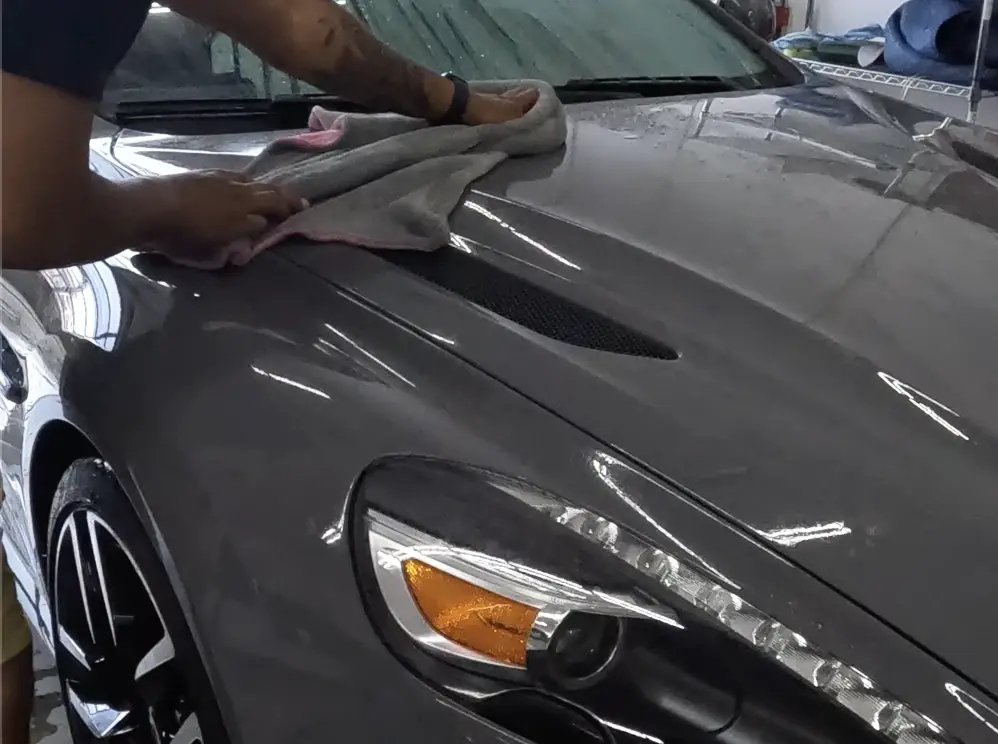
Not every hail dent presents the same level of difficulty for a technician. While paintless dent repair handles the vast majority of hail damage effectively, certain factors make specific dents more time-consuming or technically challenging to address.
Dent Location on the Panel
Dents located near the edge of a panel, close to a body line, or near structural supports tend to be more difficult to work than dents positioned in the middle of a flat, open area. Edges and creases have less flexibility in the metal, which makes careful, precise technique even more important to avoid stretching the surrounding area.
Depth and Size
Deeper dents generally require more time and a more gradual approach to reshape properly. A technician working a deep dent needs to slowly work the metal back into position in stages, checking progress frequently under specialized lighting, rather than attempting to push it back into shape all at once.
Panel Accessibility
Some panels are simply easier to access from behind than others. Doors and fenders often have more open space behind them, making tool access more straightforward. Certain roof designs, or panels near reinforced structural areas, can require more disassembly or specialized tools to reach effectively, adding time to the repair.
Dent Density
A panel with a high concentration of dents close together, common after a severe hailstorm, can be more complex to work than the same number of dents spread further apart. Overlapping stress points from densely packed dents require careful sequencing to avoid affecting areas that have already been repaired.
Paint Condition Near the Dent
Even when the paint isn't fully cracked, some dents sit close enough to a hairline paint imperfection that extra care is needed to avoid causing further paint damage during the repair process. This requires a slower, more cautious approach than a dent with paint in perfect condition.
Metal Type and Panel Design
As mentioned in broader industry discussions of vehicle materials, aluminum panels can behave differently than steel under certain repair conditions, sometimes requiring adjusted technique. Similarly, complex modern body panel curves can make consistent, even reshaping more challenging than a flatter, simpler panel design.
Why This Matters for Repair Time and Cost
Because some dents are inherently more complex to repair, the total time and, in some cases, cost of a repair job can vary even among vehicles with a similar number of dents. This is part of why a detailed, panel-by-panel assessment is so important before providing an accurate repair estimate.
What This Means for You
If your vehicle has a particularly severe or complex hail damage pattern, don't be surprised if the repair estimate reflects more time than a simpler case. This isn't a sign of unnecessary cost, but a reflection of the additional skill and care more complex dents require to repair correctly.

Curious how complex your specific damage is? Request your free assessment today.