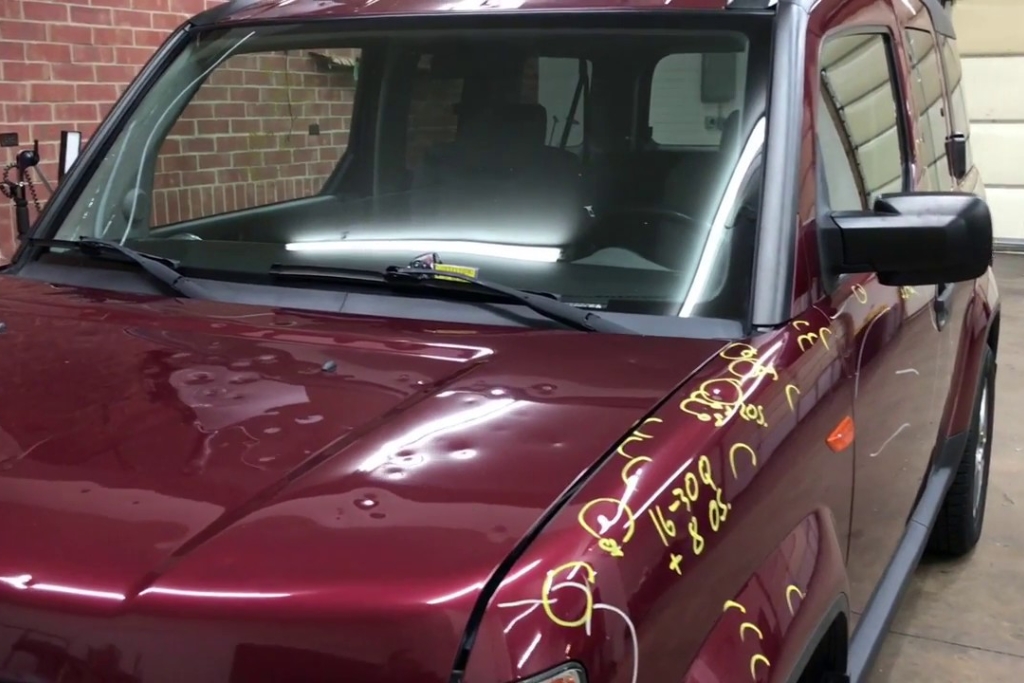
The moments right after a hailstorm can feel a little chaotic, especially if the damage looks significant. Knowing exactly what to do first can save you time, protect your insurance claim, and get you on the path to repair faster.
1. Move Your Vehicle to Safety, If Possible
If the storm is still active and you're able to safely relocate your vehicle to covered parking, doing so can prevent further damage. Only do this if it's safe to move, since driving during an active severe storm carries its own risks.
2. Inspect and Photograph the Damage
Once the storm has passed, walk around your vehicle and photograph every affected panel, including the hood, roof, trunk, doors, and fenders. Take photos in good daylight when possible, since hail dents can be difficult to see clearly in low light. Don't forget mirrors, trim, and glass, which can also sustain damage during larger hail events.
3. Check for Less Obvious Damage
Beyond body panels, check your windshield, side windows, and mirrors for cracks or chips. Sometimes glass damage is more immediately obvious than body dents, which can be a helpful indicator that other, less visible damage might also be present.
4. Note the Date and Time of the Storm
Your insurance company will likely ask for specifics about when the hail event occurred. Jotting down the date, approximate time, and general location while it's fresh helps make your eventual claim more accurate and complete.
5. Confirm Your Insurance Coverage
Before filing anything, confirm whether your policy includes comprehensive coverage, since this is generally the coverage type that applies to hail damage. If you're unsure, a quick call to your insurance provider or a look at your policy documents can clear this up.
6. Get a Professional Assessment
Once you've documented the damage yourself, getting a professional assessment is the next step. A trained technician can identify every affected panel, including damage that might not be obvious to an untrained eye, and determine whether paintless dent repair is a good fit for your specific vehicle.
7. File Your Claim With Complete Documentation
With your photos, storm details, and a professional repair estimate in hand, you're in a strong position to file a complete hail damage insurance claim. Complete documentation upfront generally leads to a smoother approval process compared to filing with limited information and following up later.
8. Ask About Vehicle Drop-Off Timing
Before committing to a repair shop, ask whether your vehicle needs to stay with them during the entire claims process or only once the repair is approved. This can significantly affect how long you're without your car.
Quick Recap Checklist

Just experienced hail damage? Request your free assessment and get started today.