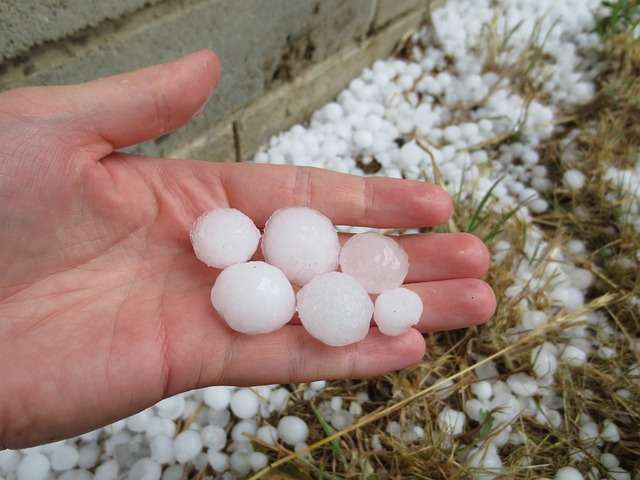
Not all hailstorms cause the same amount of damage. Hailstone size plays a huge role in how severe the resulting dents and dings end up being, and understanding this can help set realistic expectations before you even get your vehicle assessed.
Pea-Sized to Marble-Sized Hail
Smaller hailstones, roughly the size of a pea or marble, typically cause shallow, minor dents, if any noticeable damage at all. In many cases, hail this small may leave little to no visible marks, or only very light dimpling across the most exposed horizontal surfaces like the hood and roof.
Dime to Nickel-Sized Hail
As hailstones grow to dime or nickel size, dents become more noticeable. This size range often produces the classic pattern of small, rounded dents spread across the hood, roof, and trunk that most people associate with hail damage. Damage at this level is almost always an excellent candidate for paintless dent repair, since the paint typically remains intact even though the dents themselves are clearly visible.
Quarter to Golf Ball-Sized Hail
Once hailstones reach quarter size or larger, damage becomes more significant. Dents at this size are deeper and more numerous, and there's a higher chance of paint cracking, particularly on edges or creases. Windshields and glass are also more likely to crack or chip at this hail size. While paintless dent repair still handles the majority of this damage effectively, some panels may need a closer look for paint damage that could require a different repair approach.
Baseball-Sized Hail and Larger
Hail this large is less common but can cause severe damage, including deep dents, cracked paint, shattered glass, and in some cases, structural dents that go beyond what paintless dent repair alone can address. Vehicles hit by hail this size often need a combination of PDR for the majority of panels and traditional bodywork or glass replacement for the most severely affected areas.
Why Hail Size Matters for Your Claim
Understanding the general size of hail from a specific storm can help set expectations for both repair complexity and insurance claim scope. Local weather reports often note approximate hail size after a significant storm, which can be useful information to reference when discussing your damage with your insurance company or repair provider.
What This Means for Your Repair
Regardless of hail size, the right first step is always a thorough assessment. Even hail that seems large enough to cause serious damage often turns out to be almost entirely repairable through paintless dent repair, since the technique is highly effective for the rounded dent patterns hail typically produces.

Not sure how severe your hail damage really is? Request a free assessment to find out.