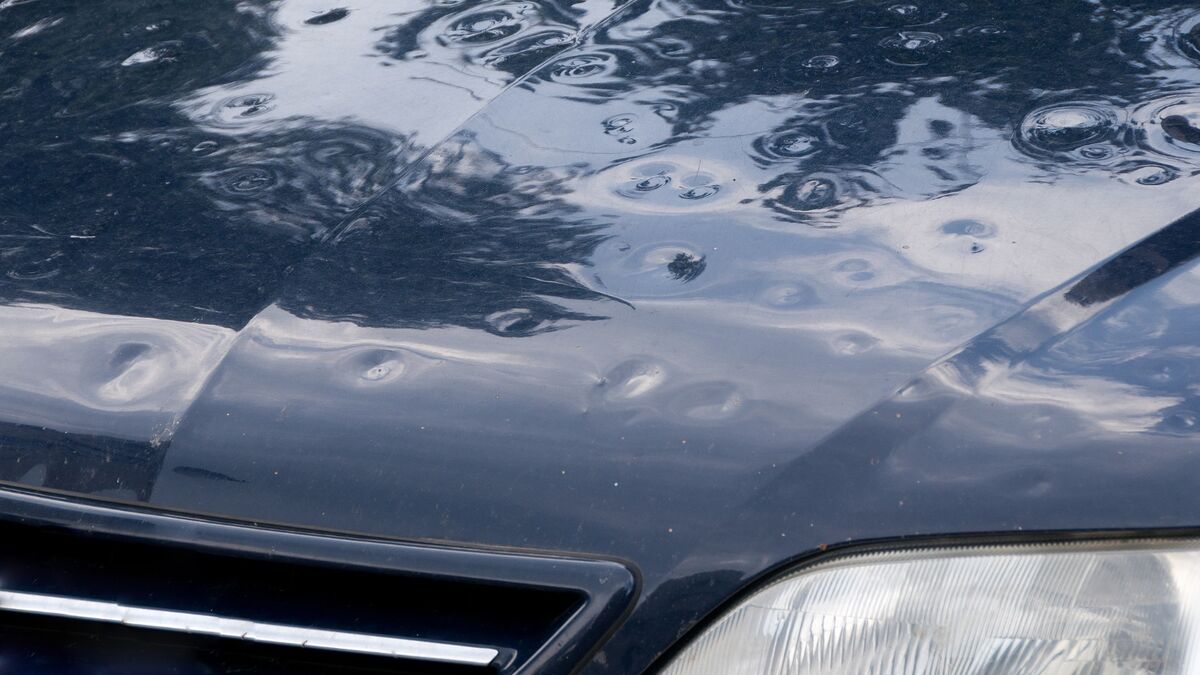
If a hailstorm just swept through the Dallas-Fort Worth area and left your car covered in dents, one of the first things on your mind is probably cost. Hail damage repair cost can vary quite a bit depending on several factors, and understanding those factors can help you know what to expect before you even schedule an assessment.
What Affects Hail Damage Repair Cost
The cost of hail damage repair depends primarily on how many panels are affected, how many dents are on each panel, and how deep or severe those dents are. A car with a handful of small dents on the hood will cost significantly less to repair than a vehicle with dozens of dents spread across the hood, roof, trunk, and all four fenders.
Panel accessibility also plays a role. Some panels are easier for a technician to access from behind, which speeds up the paintless dent repair process. Others, particularly certain roof designs or panels near structural supports, take more time and skill to work on, which can affect overall labor cost.
The size of the dents matters too. Small, shallow dents from lighter hail are generally quicker and less expensive to repair than large, deep dents from bigger hailstones. In some cases, particularly severe damage on a single panel — like a hood that's taken a major hit — might be more cost-effective to replace outright rather than repair, depending on the specific damage.
Does Insurance Cover the Cost of Hail Damage Repair?
For most Texas drivers, hail damage repair cost is covered under comprehensive auto insurance, assuming that coverage is part of your policy. Comprehensive coverage typically pays for repairs due to weather events like hail, minus whatever your deductible happens to be. This means your actual out-of-pocket cost for hail damage repair is often limited to your deductible amount, rather than the full repair bill.
This is one of the biggest reasons why understanding your policy matters before a storm even happens. If your deductible is relatively low, filing a hail damage claim after a storm often makes financial sense, since your insurance covers the bulk of the hail damage repair cost.
Why Paintless Dent Repair Helps Control Costs
Paintless dent repair is typically less expensive than traditional bodywork for comparable damage, which is good news for anyone paying out of pocket or covering a deductible. Since PDR doesn't require body filler, sanding, primer, or repainting, labor and material costs are generally lower. It's also faster, which can reduce costs tied to vehicle downtime, especially if you need a rental car during the repair process.
That said, cost savings from paintless dent repair only apply when the damage qualifies for this method. If paint has cracked or if a dent is in a difficult location, traditional repair — which usually costs more — may be necessary for that specific panel, even if the rest of the vehicle is repaired using PDR.
Getting an Accurate Estimate
Because hail damage repair cost varies so much from vehicle to vehicle, the only reliable way to know your specific number is through a hands-on or detailed photo-based assessment. A technician needs to see (or clearly view images of) every affected panel to count dents, check paint condition, and determine the right repair approach for each one.
This is also the point where insurance coordination becomes valuable. A repair provider that helps document damage and prepare estimates can make sure nothing gets missed when your claim is submitted, which protects you from being underpaid on your hail damage repair claim.
Tips for DFW Drivers After a Hailstorm

Want an accurate estimate for your hail damage repair? Schedule your free assessment here.